Agentic AI for photonics measurement. Fully air-gapped.

Agentic AI for photonics measurement. Fully air-gapped.

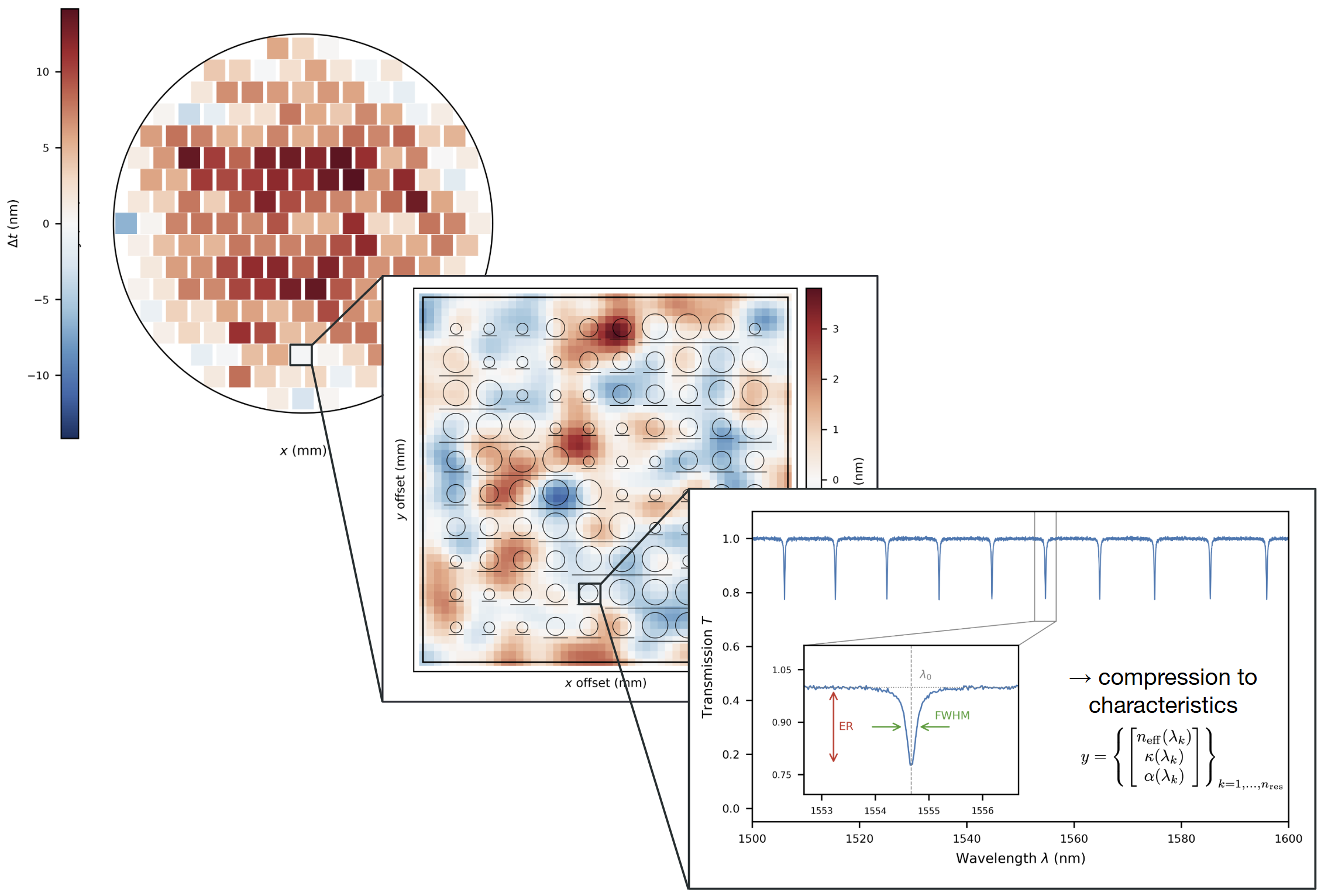
The design–test cycle

…and back to the design intent.

Interactive demo

AxMeasure
Interactive demo — not connected to instruments
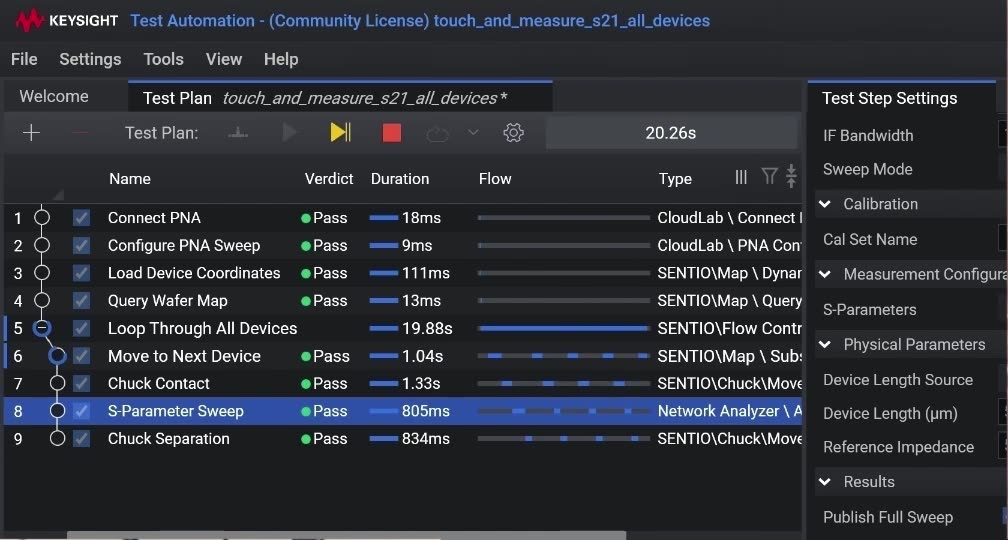
OpenTAP running the S21 test plan across a wafer

The workbench needs a wider screen than this. Open the page on a laptop to watch the OpenTAP run, browse instruments, and talk to the Lab Assistant.

Main features

Agentic

Describe the measurement in plain language.

AxMeasure plans the test, drives the instruments and extracts the device parameters from the data. The engineer reviews each step. Nothing runs unseen.

Open architecture

Connect the hardware and software already in the lab.

Existing instruments, external software and in-house scripts attach to the same workflow and are driven from the same canvas. Probers, tunable lasers, network analysers and source-measure units are a few of the driver categories. Nothing has to be replaced to be included.

Post processing

Analysis that follows the measurement.

Raw traces become device parameters in the same run. Resonances are detected, figures such as Q, FSR, group index and loss extracted, and physical models fitted with confidence intervals. Where more than one model could explain a trace, they are ranked on AIC and BIC.

Photonic models

Device models live where the data lands.

Axiomatic AI's PIC models, and a lab's own models alongside them, sit next to the data, ready for fitting and simulation the moment a measurement finishes.

Local inference

Everything runs on the unit in the lab.

Measurements, layouts and the questions asked about them never leave the building. Agents, instrument control and model fitting run on the on-site control unit, air-gapped. There is no cloud dependency to review and no outbound connection for a security team to approve.

SDK

Drop into Python at any point.

Every workflow built on the canvas can be generated as Python. A first working script comes out in minutes and stays readable, so changing it later is an edit rather than a rewrite. The SDK gives the same control of instruments and analysis steps, so automation is never blocked by the interface.

Current example capabilities

A wafer-level RF test plan in minutes.

At wafer level, the RF test plan has to be written for that DUT's specs: dozens of steps plus the calibration routine, all scripted by the engineer. Enter the specs and AxMeasure returns the plan and the calibration routine in a few minutes.

Efficiency gain

About 5×

A 15-step test plan takes 45 to 75 minutes to script, at 3 to 5 minutes a step. AxMeasure produces it in under 10 minutes.
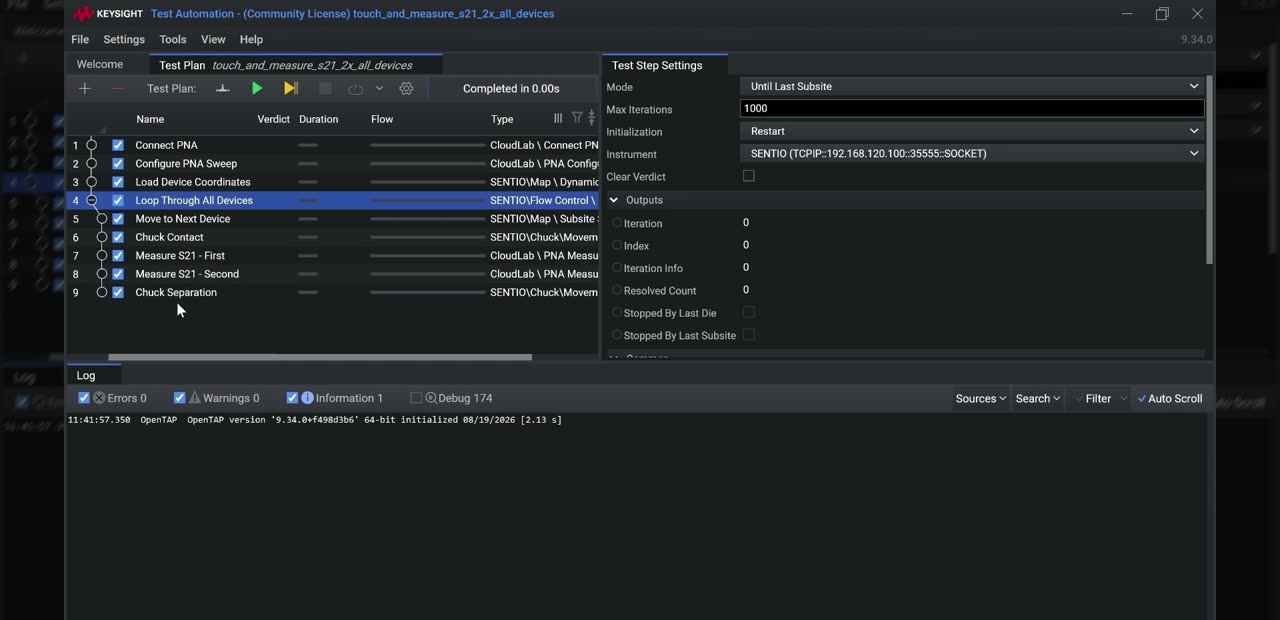
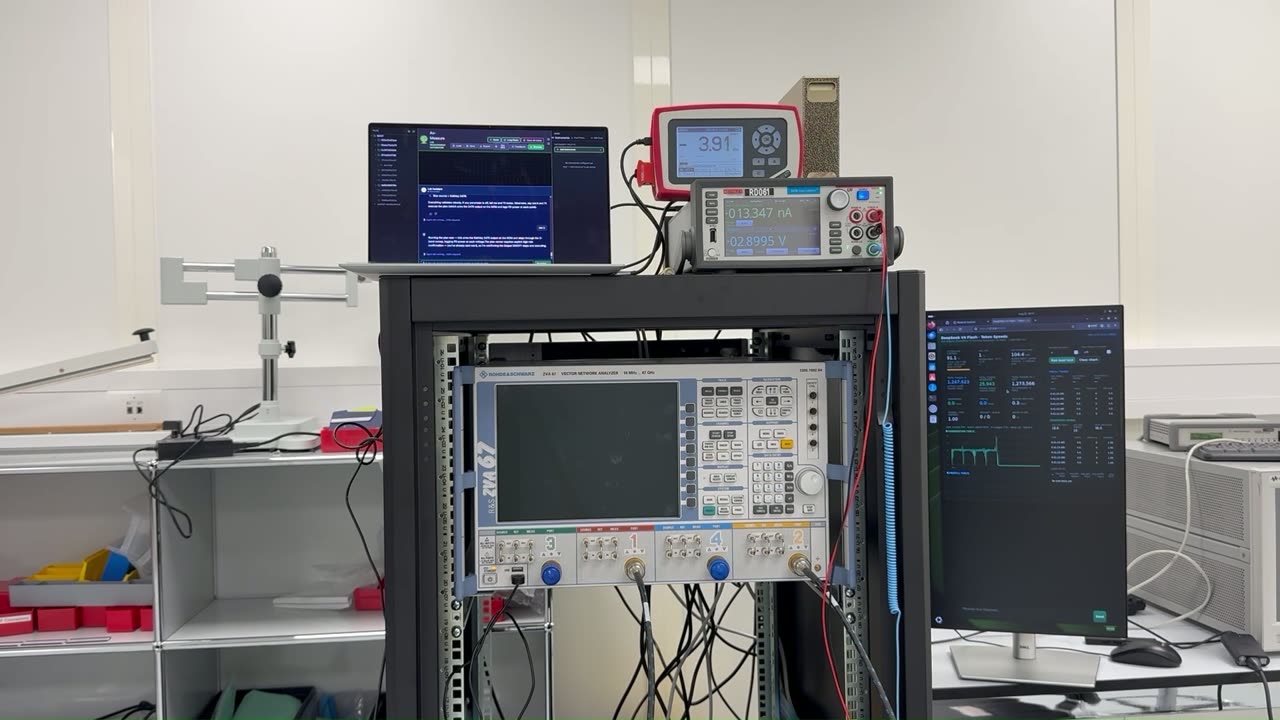
A wafer-level RF test plan in minutes.

End-to-end test, entirely on site.

From the electro-optic test plan, through driving the instruments, to a test conclusion and the plots: AxMeasure runs the whole cycle on the unit in the lab.

Time saved

A full cycle under 10 min

Plan, instruments, conclusion and plots in one local run, in under 10 minutes.

End-to-end test, entirely on site.

Fitted models come out of the same run.

Measured traces are fitted against Axiomatic AI's physical device models in the run that produced them. The model is proposed automatically, but the parameters come from the fit and are scored against the data on AIC and BIC. A result is accepted because it agrees with the measurement, not because a model proposed it.

Steps removed

No export, no second tool

The trace, the derived figures and the fitted model come out of one pass. Nothing is exported to a fitting tool and no parameters are re-entered.

News

  • PublicationMay 2026

    Agentic Tools for Automated Photonic Device Characterization and Measurement

    CLEO 2026, Long Beach · Paper AM2B.6, Metrology for Manufacturing

    A Model Context Protocol suite that lets AI agents characterise photonic devices on their own: 39 verified tools drive probers, source-measure units, vector network analysers and optical spectrum analysers, with the results fed back into design.

    Safari, Holtorf, Schäfer, Mynampati, Huembeli, Han, Wang, van der Vegt, Radican, Chaudary, Ghadimi, Chen, Taylor, Englund

    Read the paper at Optica

  • Conference demoMarch 2026

    AxMeasure runs live at OFC 2026

    OFC 2026, Los Angeles · MPI Corporation, booth 502

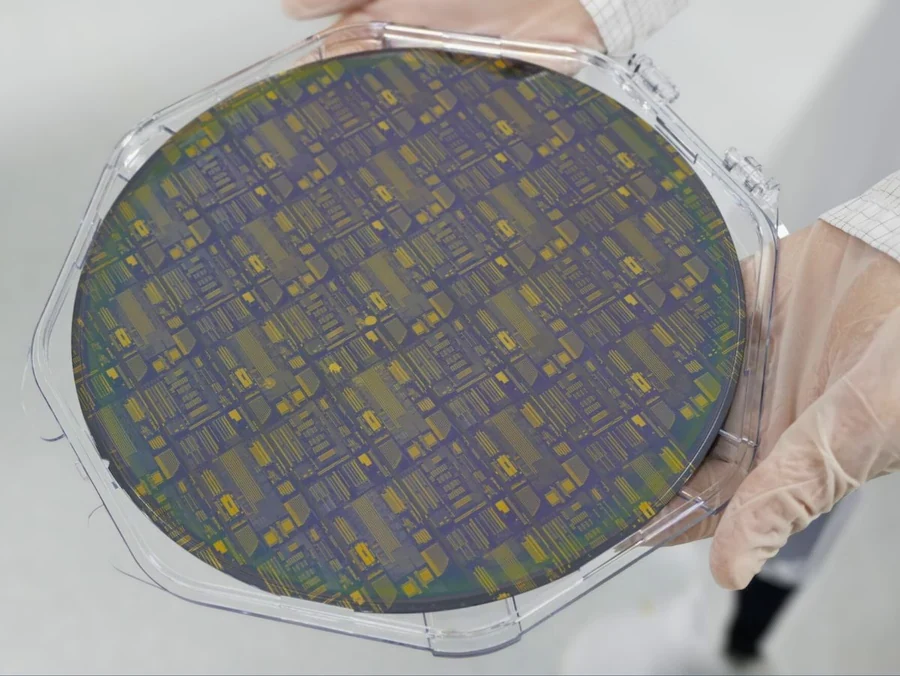
    Unattended measurement on a Lightium thin-film lithium niobate wafer, in front of visitors: test objectives set in natural language, probe coordinates taken straight from the GDS, spectra swept and fitted for Q-factor, group index and propagation loss, with every step traceable to raw data.

    Read the post on LinkedIn

  • PreprintFebruary 2026

    Agentic AI for Scalable and Robust Optical Systems Control

    arXiv 2602.20144 · with Duke University and MIT

    AgentOptics, a framework for autonomous control of heterogeneous optical hardware over the Model Context Protocol. 64 standardised tools across eight devices and a 410-task benchmark, on which agents reach 87.7 to 99.0 percent task success against at most 50 percent for code-generation baselines.

    Wang, Han, Cheng, Huang, Ji, Wu, Safari, Holtorf, AlQubaisi, Linke, Zhuo, Chen, Wang, Englund, Chen

    Read on arXiv

  • Conference demoOctober 2025

    AI-driven wafer testing demonstrated at ECOC 2025

    ECOC Exhibition 2025, Copenhagen

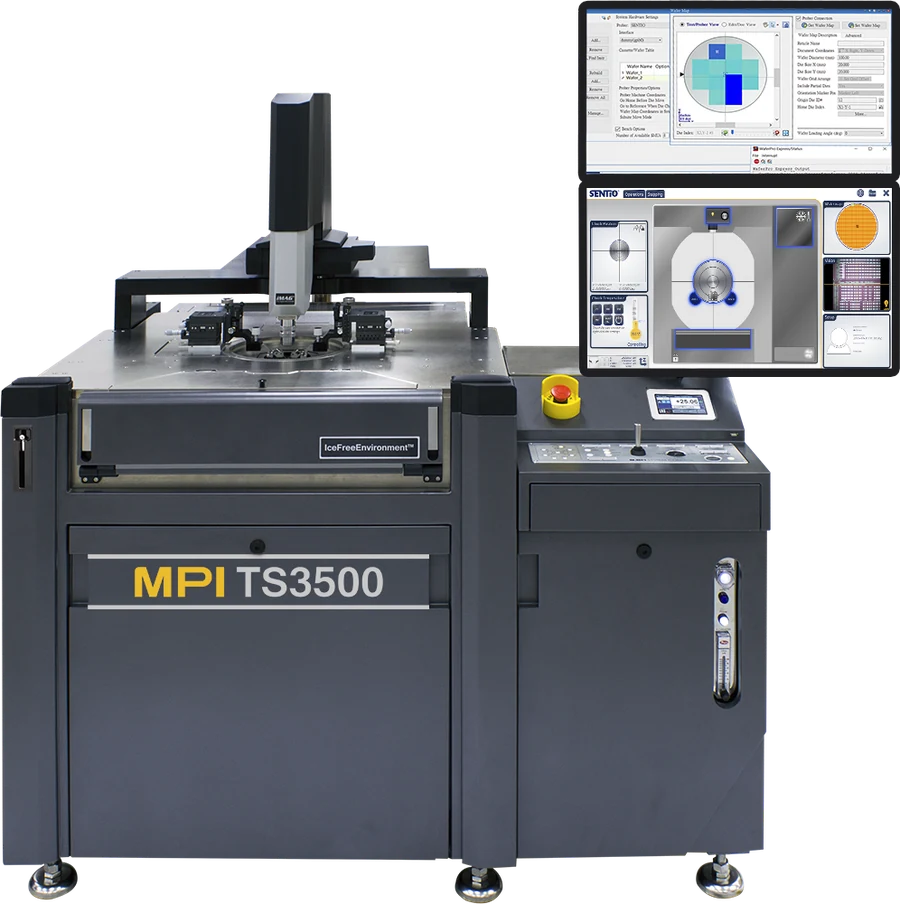
    Optica's CTO filmed a three-way conversation on the exhibition floor with MPI Corporation, Lightium and Axiomatic AI on why wafer-level photonic test has to become automatic, and how AxMeasure configures the probe station, selects devices and orders measurements from a natural-language brief.

    Posted by Jose Pozo, Chief Technology Officer, Optica

    Watch the post on LinkedInPhoto: MPI Corporation